
2025 Annual Occupational Safety and Health Incident Report
The 2025 OSH Incident Report presents an alarming and troubling picture of the conditions faced by Filipino workers throughout the year. Preventable deaths and life-altering injuries persisted in both the formal and informal sectors, revealing a systemic failure to uphold and enforce occupational safety and health standards nationwide.
Based primarily on credible news reports, the Institute for Occupational Health and Safety Development (IOHSD), a non-government workplace safety organization, documented 516 occupational safety and health incidents in 2025. These incidents claimed the lives of 369 workers and left at least 516 others injured. Even under conservative estimates, this means that at least one worker died every day due to unsafe working conditions.
It is important to note that this figure does not yet include occupational diseases and work-related illnesses, suggesting that the true toll of unsafe work on Filipino workers is far higher.
Workers died or were injured not only inside worksites but also while commuting, delivering goods, enforcing laws, responding to emergencies, or simply trying to earn a living in public and informal spaces. Seven years after the passage of the OSH Law, persistent violations of workers’ fundamental right to refuse unsafe work continue, particularly during natural disasters and within the business process outsourcing industry, where such abuses have been widely reported and documented.
Transportation-related incidents, unsafe construction practices, electrical hazards, workplace violence, and equipment failures repeatedly emerged as leading causes of workers’ deaths and injuries. These hazards cut across industries and employment status, affecting construction workers, drivers, vendors, delivery riders, security guards, farmers, fisherfolk, government employees, and other frontline workers.
Despite existing OSH laws and regulations, the recurring nature of these incidents exposes enduring weaknesses in both the law and its enforcement. Chronic employer noncompliance, systemic neglect of workers’ health and safety, and inadequate government protection have allowed this deadly pattern to persist. Year after year, workers continue to pay with their lives, a clear evidence of a system that prioritizes profit over human life and dignity.
Trends Identified Across 2025
1. Transportation-Related Incidents as the Leading Cause of Worker Deaths
Road crashes were the most dominant and deadly trend throughout the year. Workers were killed or injured in accidents involving trucks, buses, jeepneys, vans, motorcycles, tricycles, and motor bancas.
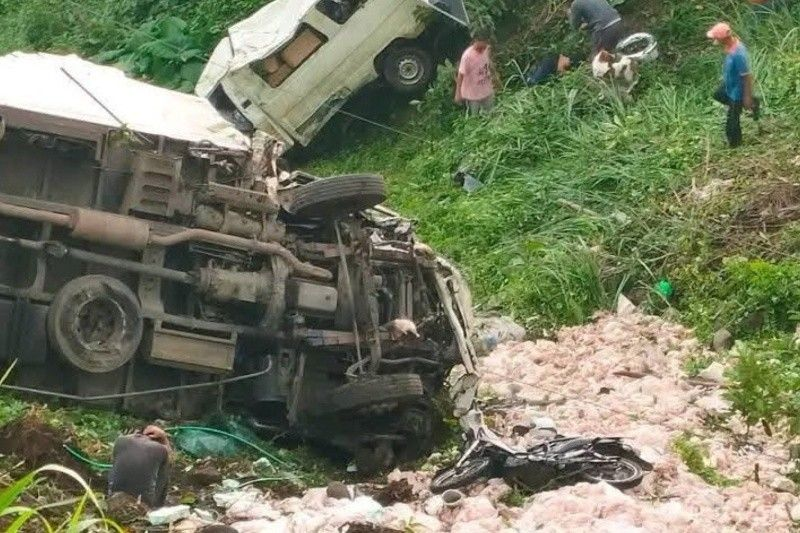
One of the most tragic cases occurred in Bukidnon, where a refrigerated truck suffered brake failure on a steep downhill road, collided with a van and a motorcycle, and plunged into a ravine — killing the driver’s helper and injuring several others. Common factors included brake failures, speeding, driver fatigue, mechanical neglect, overloading, poor road conditions, and weak transport regulation. Many victims were working, commuting, highlighting the failure to recognize transport safety as a core OSH issue.
2. Persistent Hazards in Construction, Public Works, and Infrastructure Projects

Construction remained one of the most dangerous sectors in 2025. Fatal incidents involved falls from height, collapsing walls and structures, soil cave-ins, falling objects, and drowning during site work near rivers or excavations.
One notable case occurred in Tanay, Rizal, where two construction workers were buried when soil from an upper portion of a construction site collapsed while they were digging for a fence project, killing one worker and severely injuring another. These incidents consistently pointed to the absence of risk assessments, inadequate supervision, lack of PPE, and poor enforcement of construction safety standards.
3. Informal, Contractual, and Workers Who Deal Directly With the Public Most at Risk

(Photo Courtesy: Ruby Ann Delmoro)
Throughout 2025, informal workers bore the heaviest burden of occupational risk. Vendors, tricycle drivers, delivery riders, market workers, farmers, fisherfolk, and household helpers often worked without safety standards, training, insurance, or legal protection.
One tragic case involved a delivery rider in Iloilo City who was killed after colliding with a car at an unmarked intersection along a newly opened road, highlighting how poor infrastructure planning and a lack of safety measures further endanger informal workers on the job. Their deaths and injuries reflect how informality magnifies vulnerability and exclusion from OSH protections.
4. Recurrent Electrical and Electrocution Incidents
Fatal electrocutions occurred repeatedly across the year, affecting electricians, linemen, construction workers, installers, painters, and even farm workers. Many incidents involved live wires, improper installations, unsafe repairs, and the absence of lockout/tagout procedures.
One alarming case occurred in Cagayan de Oro City, where a worker was killed, and three others were injured while installing solar streetlights, pointing to poor hazard assessment and inadequate safety precautions on site. These deaths highlight persistent gaps in electrical safety training, certification, and awareness of hazards.

5. Escalating Workplace and Work-Related Violence

Violence against workers was a persistent and alarming trend. Security guards, drivers, vendors, delivery riders, service workers, and government personnel were stabbed, shot, assaulted, or killed during robberies, disputes, enforcement operations, or workplace conflicts.
Several cases involved security guards who were shot while on duty, including those attacked at bus terminals, pawnshops, and commercial establishments, often during robberies or workplace disputes. These incidents highlight how frontline workers tasked with maintaining safety are themselves left highly exposed to violence with minimal protection. The frequency of these incidents reveals that violence is no longer an isolated risk but a structural occupational hazard, especially for workers who deal directly with the public and other frontline workers.
6. Government and Frontline Workers Not Spared
Traffic enforcers, firefighters, engineers, barangay personnel, teachers, and other public employees were repeatedly injured or killed while on duty.
One notable case involved traffic enforcers in Bulacan and Davao City who were struck by vehicles while managing traffic and pursuing violators, leaving them seriously injured in road mishaps. In another tragic incident, teachers were killed in work-related attacks, underscoring the growing risks faced by public sector workers even within their workplaces and communities. These incidents highlight serious deficiencies in state responsibility, particularly in protecting workers tasked with public service, enforcement, and emergency response.
7. Equipment Failures, Fires, Explosions, and Confined-Space Hazards
Machine entanglements, falling equipment, warehouse and factory fires, explosions, tunnel collapses, and septic tank incidents recurred across the year, reflecting a persistent violation of workers’ right to safe and healthy working conditions.
In Bukidnon, a dump truck suffered mechanical failure and crashed into an electric post, a parked jeep, and a nearby house, trapping the driver for hours and injuring both him and his assistant.
In Davao City, two young workers were killed after being trapped inside a burning foam warehouse, raising serious concerns over fire safety compliance and emergency preparedness.
Meanwhile, in Misamis Oriental, two workers died of suffocation while cleaning a clogged septic tank after being overcome by toxic fumes, exposing the deadly risks of confined-space work without proper safety protocols.

These recurring tragedies point not only to poor maintenance and unsafe practices, but also to weak labor inspection, lack of regular safety audits, and the failure of authorities to enforce OSH standards — allowing hazardous workplaces to continue operating unchecked.
8. Climate-Related Hazards and Extreme Weather Increasing Risks for Workers
Climate and extreme weather conditions increasingly contributed to work-related deaths and injuries throughout 2025.
One tragic case involved a farm worker in Negros Occidental who was killed by a lightning strike while harvesting sugarcane during a thunderstorm, showing how outdoor workers remain highly exposed to climate hazards.

In another case, two traffic enforcers in Iloilo City died due to heat-related illnesses after prolonged exposure to extreme temperatures while on duty. These incidents reflect how rising heat, storms, and unpredictable weather patterns are directly endangering workers’ lives.
At the same time, reports showed that BPO workers were often forced by their companies to continue working during severe typhoons and extreme weather events, risking their safety during flooding, strong winds, and dangerous travel conditions.
Together, these cases highlight the growing failure to integrate climate risks into occupational safety policies and to protect workers’ right to safe working conditions during extreme weather.
Consolidated Recommendations for 2025
1. Immediate passage of OSH Law amendments to include provisions on criminalization of OSH standards violations and climate-adaptive OSH measures
Urgently pass House Bill 5221 to amend and strengthen the Occupational Safety and Health Law by imposing heavier penalties on employers who commit serious OSH standards violations and by ensuring the criminal accountability of negligent company officials. The passage of this measure is a critical step toward ending the culture of OSH neglect and impunity in workplaces, a culture that has already cost Filipino workers their lives.

The OSH Law must also be amended to mandate climate-adaptive OSH measures as standard workplace programs applicable to all workers. These provisions should strengthen OSH monitoring, early warning systems, and risk communication, particularly during disasters, extreme weather events, and other emergency situations. Employers and government agencies must be required to issue timely safety advisories, enforce work suspension protocols, and provide adequate protective measures to prevent injuries and deaths, especially among frontline and informal workers.
2. Establish Appropriate OSH Guidelines in the Transportation Sector
Develop and enforce comprehensive and appropriate OSH guidelines for the transportation sector, including fatigue and working-hour controls, proper driver training, load regulation, and clear employer accountability.
These standards must also cover informal transport workers such as jeepney drivers, tricycle operators, delivery riders, and motorcycle taxi drivers, who remain among the most exposed to road-related risks yet are often excluded from formal safety protections.
3. Expand Protection for Informal and Precarious Workers
Extend OSH coverage, safety training, insurance, and emergency response systems to informal workers, contractual laborers, and self-employed workers who remain largely unprotected.
4. Address Workplace Violence as an OSH Concern
Develop and enforce workplace violence-prevention policies, including conflict resolution mechanisms, security protocols, crisis response systems, and mental health support — especially for frontline workers.
5. Improve Safety for Government and Frontline Workers
Ensure stronger OSH oversight, adequate equipment, training, and support systems for government employees engaged in field operations, enforcement, disaster response, and public service.
ANNEXES
| Annex A | Monthly Data |
| Annex B | Accidents |
| Annex C | Industries Affected |
Annex A
Monthly Data
| MONTH | # OF CASES | # OF DEATHS | # OF INJURIES |
| January | 31 | 26 | 41 |
| February | 35 | 20 | 33 |
| March | 30 | 13 | 42 |
| April | 37 | 29 | 49 |
| May | 46 | 34 | 51 |
| June | 39 | 31 | 40 |
| July | 64 | 52 | 54 |
| August | 48 | 34 | 62 |
| September | 50 | 36 | 31 |
| October | 53 | 39 | 45 |
| November | 35 | 28 | 27 |
| December | 48 | 27 | 41 |
| TOTAL | 516 | 369 | 516 |
Annex B
Accidents (categories based on the Asia OSH Map)
| ACCIDENTS | # OF CASES |
| Road traffic injuries | 211 |
| Violence and harassment by people or animals | 155 |
| Fire/Explosion | 32 |
| Electrocutions | 41 |
| Collapse | 18 |
| Others | 17 |
| Exposure to harmful substances or environment | 16 |
| Crashes or stuck by equipment/machines | 10 |
| Slips, trips, and falls | 8 |
| Occupational stress, burnout and fatigue | 4 |
| Contact with high or low temperature | 3 |
| Illness | 1 |
Annex C
Industries Affected
| INDUSTRY | # OF CASES | |
| 1 | Services | 397 |
| Wholesale and Retail Trade; Repair of Motor Vehicles and Motorcycles | 25 | |
| Transportation and Storage | 238 | |
| Accommodation and Food Service Activities | 19 | |
| Information and Communication | 7 | |
| Financial and Insurance Activities | 3 | |
| Real Estate Activities | 0 | |
| Professional, Scientific and Technical Activities | 2 | |
| Administrative and Support Service Activities | 29 | |
| Education | 7 | |
| Human Health and Social Work Activities | 10 | |
| Arts, Entertainment and Recreation | 2 | |
| Other Service Activities except Activities of Membership Organizations | 55 | |
| 2 | Industry | 82 |
| Mining and Quarrying | 6 | |
| Manufacturing | 9 | |
| Electricity, Gas, Steam and Air Conditioning Supply | 2 | |
| Water Supply; Sewerage, Waste Management and Remediation Activities | 8 | |
| Construction | 57 | |
| 3 | Agriculture, Forestry, and Fishing | 43 |
| 4 | Others | 14 |