
IOHSAD OSH Incident Monthly Report — July 2026
This monthly report is compiled and released by the Institute for Occupational Health and Safety Development (IOHSAD), a non-government organization that monitors and documents occupational safety and health (OSH) incidents in the Philippines. The figures presented here are based on news reports and media accounts of workplace-related deaths and injuries, gathered and verified through IOHSAD’s own monitoring efforts.
The report covers workers regardless of their mode of employment — whether regular, contractual, informal, self-employed, or engaged in other forms of livelihood — as long as the incident is confirmed to have occurred while the person was working or earning a livelihood.
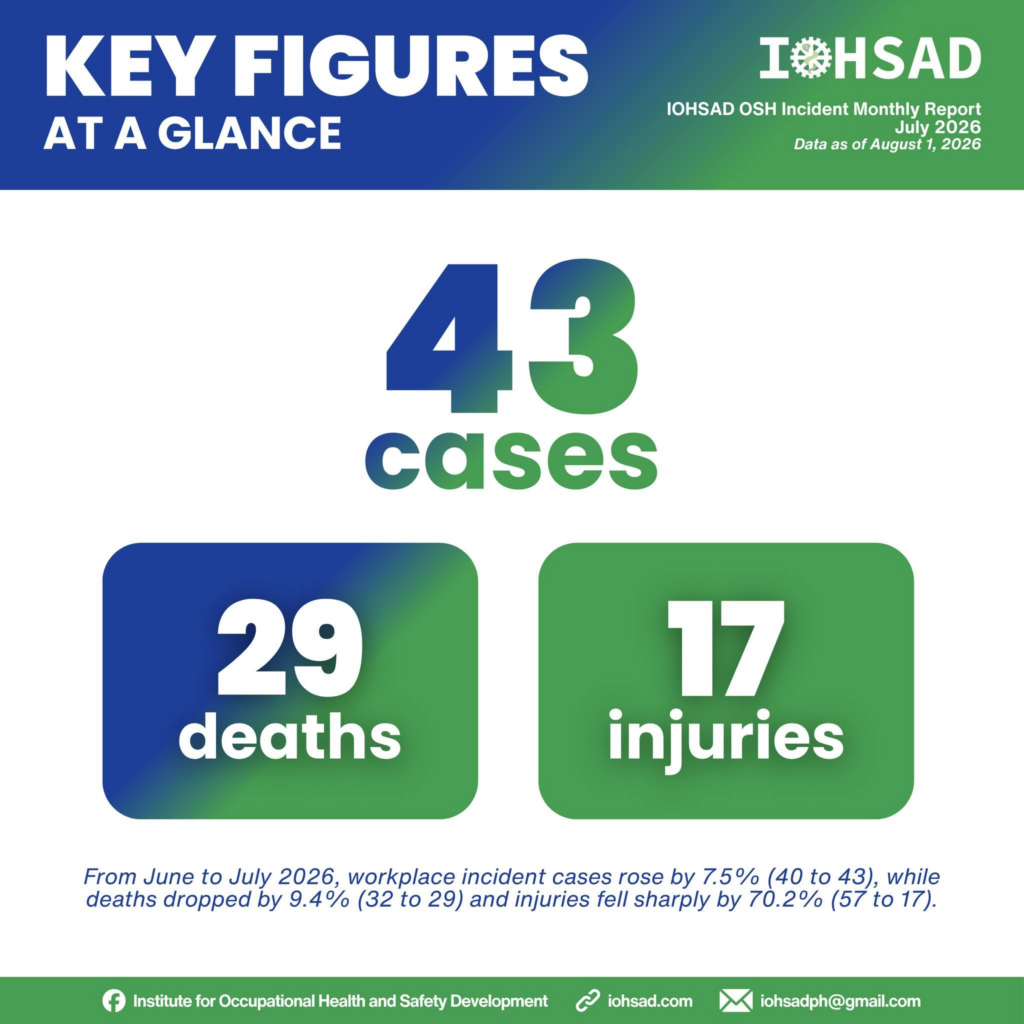
Month-on-month comparison (June to July 2026):
• Cases increased by 7.5% (from 40 to 43)
• Deaths decreased by 9.4% (from 32 to 29)
• Injuries decreased sharply by 70.2% (from 57 to 17)
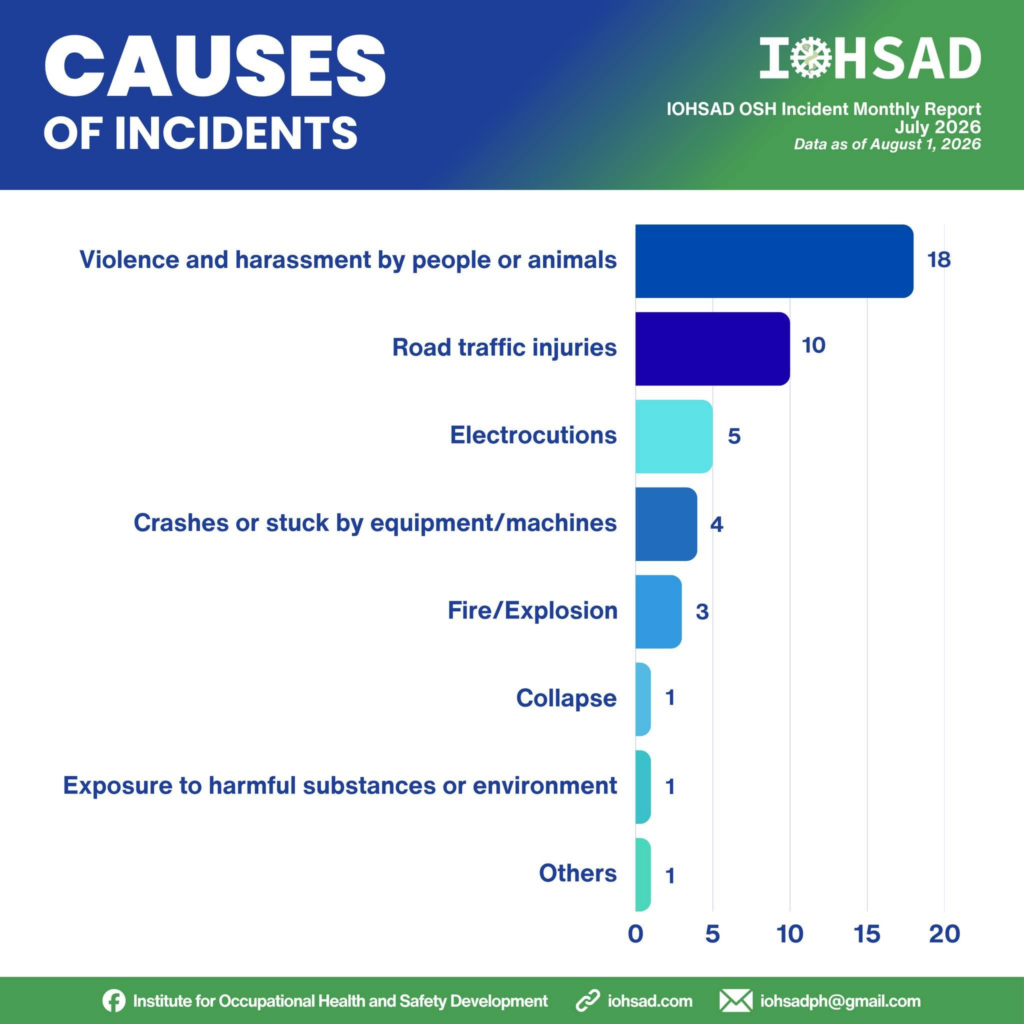
Causes of Accidents
Violence and harassment, along with road traffic injuries, together account for the majority of recorded incidents this month.
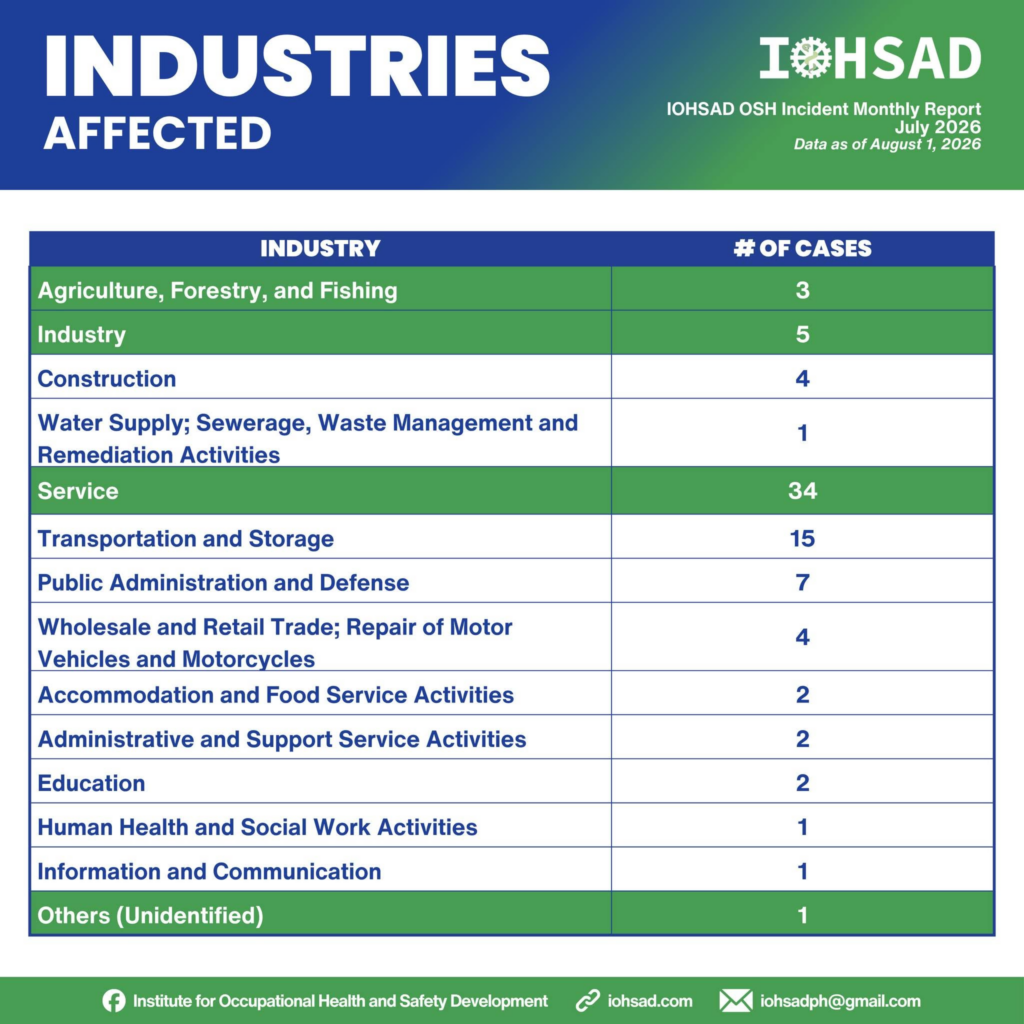
Industries Affected
The service sector recorded the highest number of cases, driven largely by incidents in Transportation and Storage.
Notable Trends This Month
Beyond the numbers, a closer look at the individual cases logged in July shows several recurring patterns:
Riders and delivery workers are frequent targets of violence
Motorcycle taxi drivers, delivery riders, and app-based ride-hailing drivers were shot, stabbed, or robbed in at least five separate incidents (Cavite, Caloocan, Bukidnon, Roxas City, and others). Several cases involved “riding-in-tandem” gunmen or passengers who booked rides specifically to rob or attack the driver, a pattern that recurred throughout the month.
Electrical linemen and utility workers remain highly exposed
Electrocution killed workers performing routine tasks — installing transformers, trimming trees near power lines, and repairing lines — in Pangasinan, Cagayan, Quezon, and Camarines Sur. This reflects the continued risk faced by linemen and contractual workers assigned to electrical maintenance.
Street and market vendors face both traffic and violence risks
Vendors were killed by a runaway fuel tanker, shot by motorcycle gunmen, and even beaten and stabbed by customers over a trivial dispute, highlighting the precarious, largely unprotected conditions of informal and micro-enterprise workers.
Truck helpers (“pahinante”) are especially vulnerable to crush and traffic-related deaths
Multiple cases involved helpers being pinned, run over, or crushed by the very vehicles or cargo they were assisting with in Lucena, Cebu, and Antipolo.
Workers commuting to or from duty were also caught in violence, including a barangay secretary, a police officer, and a broadcast media technician killed while on their way to or from work, underscoring that occupational risk extends beyond the workplace itself.
Most fire-related incidents this month (fishing vessels, a poultry farm, a hospital storeroom) were contained quickly and did not result in injuries, in contrast to the fatal outcomes seen in electrocution and violence-related cases.
These patterns reinforce the report’s overall finding: violence and harassment remain the leading cause of work-related harm, closely followed by road-traffic-related incidents, with delivery/ride-hailing workers, linemen, and vendors emerging as particularly at-risk groups this July.